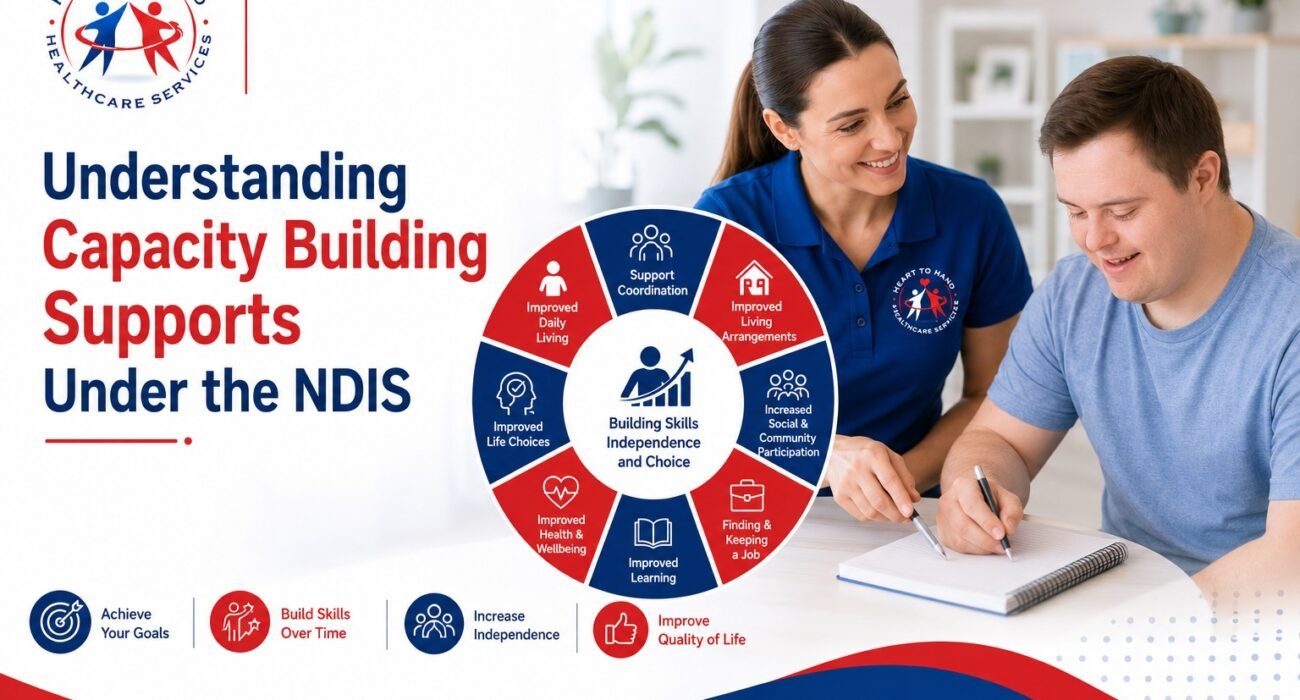
Capacity Building is one of the three main support categories in the NDIS, alongside Core Supports and Capital Supports. It’s also the one that people often understand least clearly, which means it sometimes gets underused or misapplied. Getting familiar with what it actually covers can make a real difference to how well your plan works for you.
The Purpose of Capacity Building
The name gives it away: Capacity Building funding is designed to build your capacity — your skills, independence, and ability to participate in life. Rather than funding ongoing supports you’ll always need, Capacity Building is meant to invest in things that increase what you can do over time.
That said, this doesn’t mean Capacity Building is only for people who expect to become fully independent. The ‘building capacity’ goal applies even when progress looks different for different people. For someone with a complex disability, building capacity might mean developing skills to communicate more effectively or to manage their own supports. The direction matters, not reaching a specific endpoint.
The Eight Subcategories
Capacity Building funding is divided into eight subcategories, and this is where it gets specific. Unlike Core Supports, where you have reasonable flexibility to shift funding between subcategories, Capacity Building funding is mostly ring-fenced. Money in one subcategory generally can’t be spent on another.
The subcategories are: Support Coordination, Improved Living Arrangements, Increased Social and Community Participation, Finding and Keeping a Job, Improved Learning, Improved Health and Wellbeing, Improved Life Choices (which covers plan management and some financial skills), and Improved Daily Living.
Improved Daily Living is the largest subcategory for most participants — it covers therapy services including occupational therapy, physiotherapy, speech pathology, and psychology.
How Therapy Fits In
Allied health therapy is one of the most significant uses of Capacity Building funding for many participants. Occupational therapy helps with activities of daily living, adaptive equipment, and home modification recommendations. Speech pathology supports communication and swallowing. Physiotherapy addresses movement, pain, and physical function. Psychology provides mental health support where it relates to disability.
These aren’t once-off consultations in most cases — they’re ongoing programs of support that build skills and function over time. When participants don’t use their Capacity Building therapy funding, they often find their functional independence stagnates rather than develops.
Employment and Education Supports
If work or study is part of your goals, Capacity Building has relevant subcategories. ‘Finding and Keeping a Job’ funds employment supports like job coaches, support with resume and interview preparation, and assistance transitioning into or maintaining employment.
‘Improved Learning’ covers supports that help you access education, whether that’s assistance in a school or TAFE environment, transition planning between education levels, or support to access courses that build skills related to your goals.
What It Doesn’t Cover
Capacity Building doesn’t fund ongoing supports that you’ll always need regardless of any capacity development. That’s what Core Supports is for. If you need daily personal care that isn’t going to change regardless of any intervention, that belongs in Core, not Capacity Building.
It also doesn’t fund supports that belong in other systems. Health services that Medicare or state health should fund aren’t shifted to NDIS Capacity Building simply because there’s money there. The NDIS is meant to complement the health system, not substitute for it.
Making Use of What You Have
One common finding at plan reviews is that participants haven’t used their Capacity Building funding effectively. Sometimes this is because they didn’t know what it could be used for. Sometimes they couldn’t find a suitable provider. Sometimes the goals in their plan didn’t feel relevant to their actual life.
If you have Capacity Building funding that you’re not using well, your support coordinator can help identify appropriate providers and link the funding to goals that feel meaningful. Under-spending in Capacity Building is often an opportunity that’s been missed, not a sign that you don’t need it.