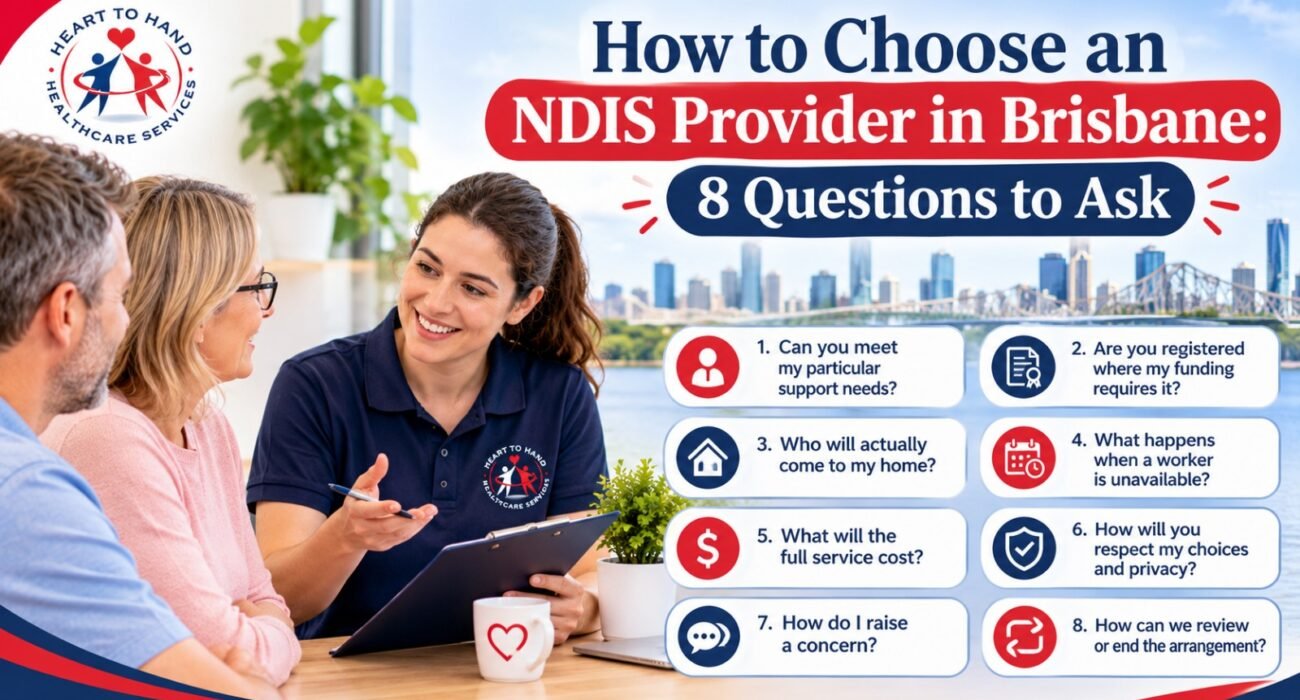
A provider can offer the right service on paper and still be a poor fit for your daily life. Perhaps the available shift starts too late, workers change frequently or nobody explains extra charges clearly. These details matter when someone will be supporting you at home or helping you take part in the community.
Before choosing an NDIS provider in Brisbane, write down the support you need, when you need it and what matters to you about how it is delivered. Then use the following questions to compare the actual arrangements. You can ask them yourself or involve a trusted person, advocate or support coordinator.
1 Can you meet my particular support needs
Begin with a real example of your day. Explain the tasks involved, the time they take and anything that makes them more complex. A provider who offers personal care generally may not be equipped for every specific health-related support.
Ask who will assess your needs before services begin. If the provider needs further information from a clinician, establish how that will be obtained with your consent. Look for clear limits as well as capabilities. A responsible provider should be willing to say when a request falls outside their expertise.
Heart to Hand Healthcare Services outlines its support services across Brisbane and Southeast Queensland. Use a service list as a starting point, then discuss the details that apply to you.
2 Are you registered where my funding requires it
If your funding is NDIA-managed, you must use a registered provider for those supports. People with plan-managed or self-managed funding can usually choose registered or unregistered providers, although some support types require registration regardless of management method.
Check the current requirements for the service you are considering. A business describing itself as registered does not mean it is registered for every possible support. Ask for the legal business name and relevant registration details, then use official provider information to verify them.
Registration is one consideration in your decision. You still need to assess communication, relevant competence, staffing and whether the provider can deliver the agreed service consistently.
3 Who will actually come to my home
Ask how workers are selected and matched. Relevant experience matters, but so do communication preferences, cultural considerations and how comfortable you feel with the person providing support.
Find out whether you can meet the proposed worker before regular shifts begin. Ask what happens if the match does not work and whether you can request a change. If you prefer a worker of a particular gender for intimate personal care, discuss that early rather than assuming it will be arranged.
For complex support, ask how the worker’s competence for your particular needs is confirmed. A general training certificate does not explain whether someone can safely follow your individual support plan.
4 What happens when a worker is unavailable
Reliable support requires a backup arrangement. Ask who you contact when a worker is late or does not arrive, and whether that contact is available during your actual support hours.
A provider serving Brisbane, Logan and Redlands may have a wide service area, but availability in your suburb and time slot is what matters. Ask how travel between shifts is planned and whether replacement staff know your routines before arriving.
If missing a shift would put your safety at risk, discuss the contingency plan in detail. An unfamiliar replacement without the necessary skills may not be an acceptable solution. Agree on how changes are communicated and who helps when the usual plan fails.
5 What will the full service cost
Request a written explanation of the charges. In addition to the main hourly rate, discuss any proposed travel, transport, non-face-to-face work, reporting and cancellation charges. Ask which charges can apply to your supports under the current NDIS rules and pricing arrangements.
A price limit is not a statement that every provider must charge that amount. Nor does a quoted hourly rate tell you the total cost of a regular service. Ask for an example showing what a typical week would cost your plan.
Check personal expenses too. Community activities may involve costs that are not payable from your NDIS funding. Knowing these in advance helps you choose an arrangement you can sustain.
6 How will you respect my choices and privacy
You should have a say in how support is delivered, including routines, communication and the people involved in decisions. Ask how the provider records your preferences and makes them available to the workers who need them.
Find out what information is collected, where it is kept and who can access it. Sharing relevant information between clinicians and support staff can be useful, but it should follow appropriate consent and privacy arrangements.
If you use communication aids, need an interpreter or prefer information in an accessible format, explain that before signing. Notice whether staff speak directly to you or automatically direct every question to someone accompanying you.
7 How do I raise a concern
Ask for the complaints process before you need it. You should know whom to contact, how a concern will be recorded and when you can expect a response. Ask whether you can involve an advocate or support person.
You can raise concerns with the NDIS Quality and Safeguards Commission if you are uncomfortable approaching the provider or dissatisfied with its response. Immediate danger or a medical emergency requires the appropriate emergency response rather than waiting for a complaints procedure.
Pay attention to how the provider answers this question. An open, practical explanation is more useful than reassurance that nobody ever complains.
8 How can we review or end the arrangement
Read the service agreement before committing. It should explain the supports, costs and responsibilities, along with how changes and cancellations are handled. Ask for unclear wording to be explained in everyday language.
Check the notice required to end services and any applicable fees. Also ask how the provider will help with a handover if you move elsewhere. For essential daily support, plan continuity so a change of provider does not leave an unsafe gap.
Agree on a review point after services begin. This gives you a planned opportunity to discuss what is working, what needs changing and whether the support remains suited to your needs.
Compare the answers after the meeting
You do not have to decide during the first conversation. Keep the written quote and agreement, note anything still unanswered and compare providers against the same requirements.
A useful choice is one you understand: who will attend, what they will do, what it costs and how you can change things. That clarity makes the first weeks of support easier to manage and gives you something concrete to refer back to if the service falls short.