When nursing involvement matters most
Not every disability support need requires a registered nurse, but for a genuinely significant number of participants, particularly those with complex medical needs, high intensity personal care requirements, or conditions that can change quickly, nursing involvement in a support team makes a measurable difference to safety outcomes, not just a theoretical one.
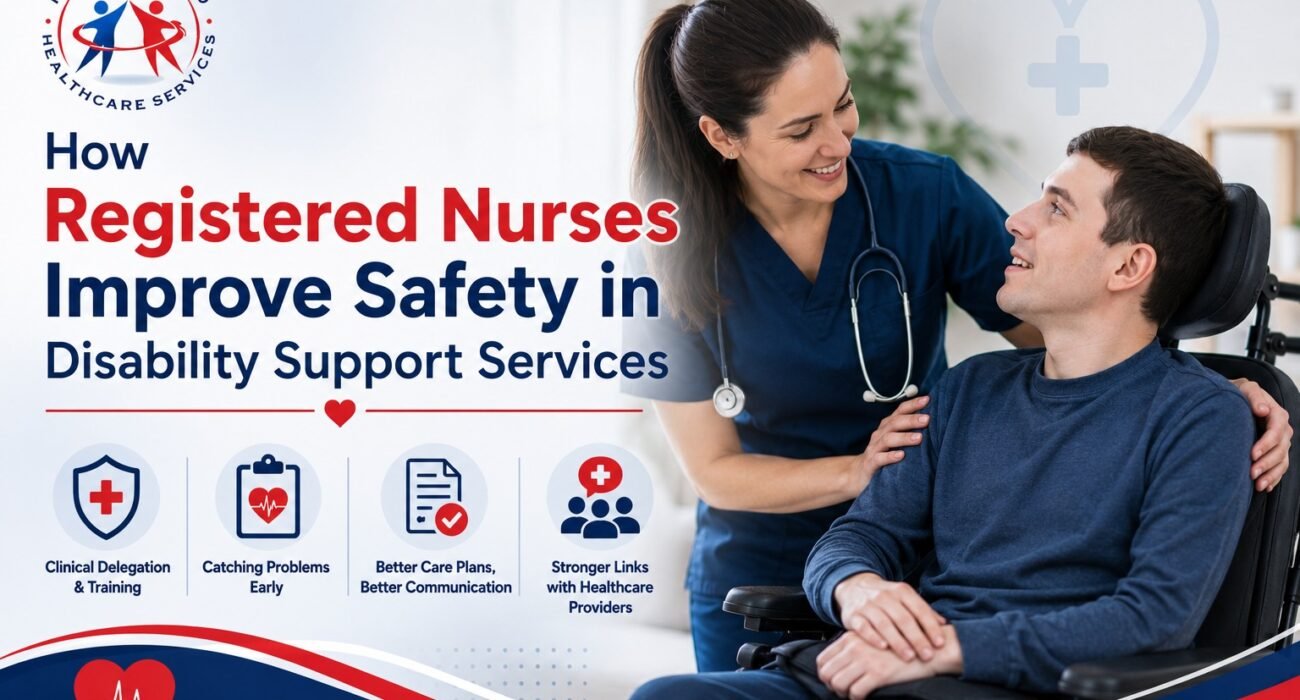
Clinical delegation and training
One of the clearest ways nurses improve safety is through clinical delegation and training of support workers. Many tasks that fall under high intensity supports, such as medication administration, wound care, tracheostomy management, and complex bowel care, legally and practically require a registered nurse to assess the specific participant, train the support worker on that individual’s needs, and sign off on their competency before they’re delegated to perform the task independently. A support worker trained generically without this specific delegation process is far more likely to miss subtle warning signs unique to that person’s condition.
Catching problems early
Nurses also bring an early warning capability that support workers, however experienced, generally aren’t trained to provide. A registered nurse involved in regular reviews is more likely to catch small changes, such as a slight shift in skin condition, a change in breathing pattern, or subtle behavioural signs of pain or discomfort, before they become urgent problems requiring hospitalisation. This kind of proactive monitoring is genuinely one of the biggest safety benefits nursing involvement brings to a support model, since it shifts care from reactive to preventative.
Better care plans, better communication
Care plan quality improves substantially with nursing input too. A care plan written and regularly reviewed by a nurse tends to be far more specific and clinically grounded than one written without that expertise, with clear instructions on what to monitor, what constitutes a concerning change, and exactly what steps to take if something goes wrong.
Nurses also act as a bridge between support services and the broader healthcare system, such as GPs, specialists, and hospitals, which matters enormously when a participant’s needs change or an urgent issue arises. A provider with strong nursing involvement can communicate clinical information accurately and quickly to other healthcare providers, rather than relying on secondhand descriptions from support staff without clinical training.
For families weighing up providers, asking specifically how nursing oversight is built into day to day support, not just available on request, is one of the most useful questions to ask.