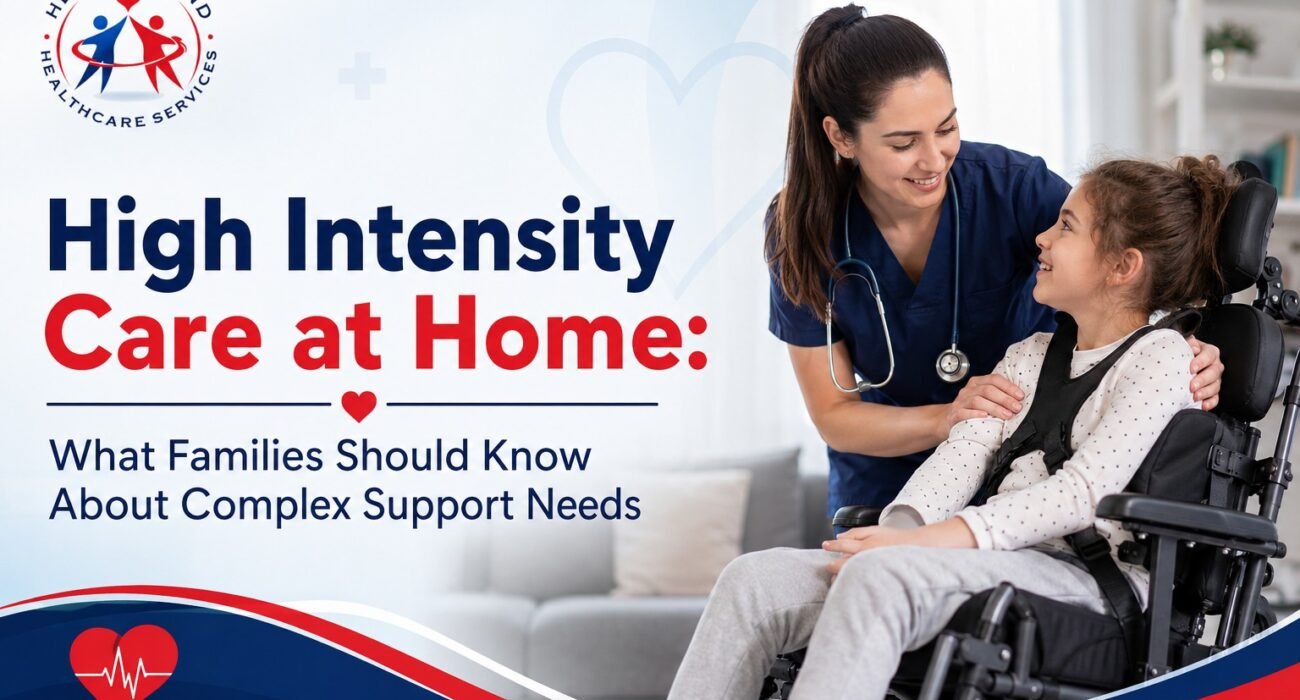
A daunting idea that often works well
When a family member has complex or high intensity support needs, things like tracheostomy care, complex bowel care, ventilator support, or significant behaviour support requirements, the idea of managing that at home rather than in a clinical setting can feel daunting at first. But for a lot of families across Redland City, the Gold Coast and greater Brisbane, home based high intensity support genuinely offers a better quality of life, provided it’s set up properly with the right level of clinical oversight.
Training and delegation come first
High intensity supports differ from standard personal care in one crucial way. They require support workers with specific training and, in many cases, direct clinical delegation from a registered nurse. This isn’t a box ticking formality. A support worker managing complex care without proper training and oversight is a genuine safety risk, not just a compliance issue. Families should feel entitled to ask exactly what training a support worker has completed for their specific care needs, and how that training is kept current.
Care that still feels like home
One thing that often surprises families is how much high intensity support can still centre around normal daily life rather than feeling purely clinical. Good high intensity care at home isn’t just about managing medical tasks safely. It’s about doing that in a way that still allows the person to be part of family life, go to appointments, get outdoors, and maintain relationships, rather than the home starting to feel like an extension of a hospital ward.
Why consistent staff matter more here
Consistency of staffing matters enormously here, more than it does for lower intensity support. Complex care often depends on staff who know the person’s specific routines, subtle changes in condition, and communication style. A rotating cast of unfamiliar workers isn’t just less comfortable for the family. It can genuinely increase risk if new staff aren’t fully briefed on specific protocols.
Families are well within their rights to ask a provider how they manage staff continuity and what backup plan exists if a regular worker is unavailable.
What good nursing oversight looks like
Registered nurse oversight is the other piece that’s easy to underestimate. Nurses aren’t just there for the clinical tasks they perform directly. A good nursing oversight model involves regular review of care plans, training and supervision of support workers, and being available for advice when something changes unexpectedly. Families navigating high intensity care for the first time should feel confident asking a provider to explain exactly how nursing oversight works in practice, not just that it exists on paper, because that distinction matters enormously when something does go wrong.