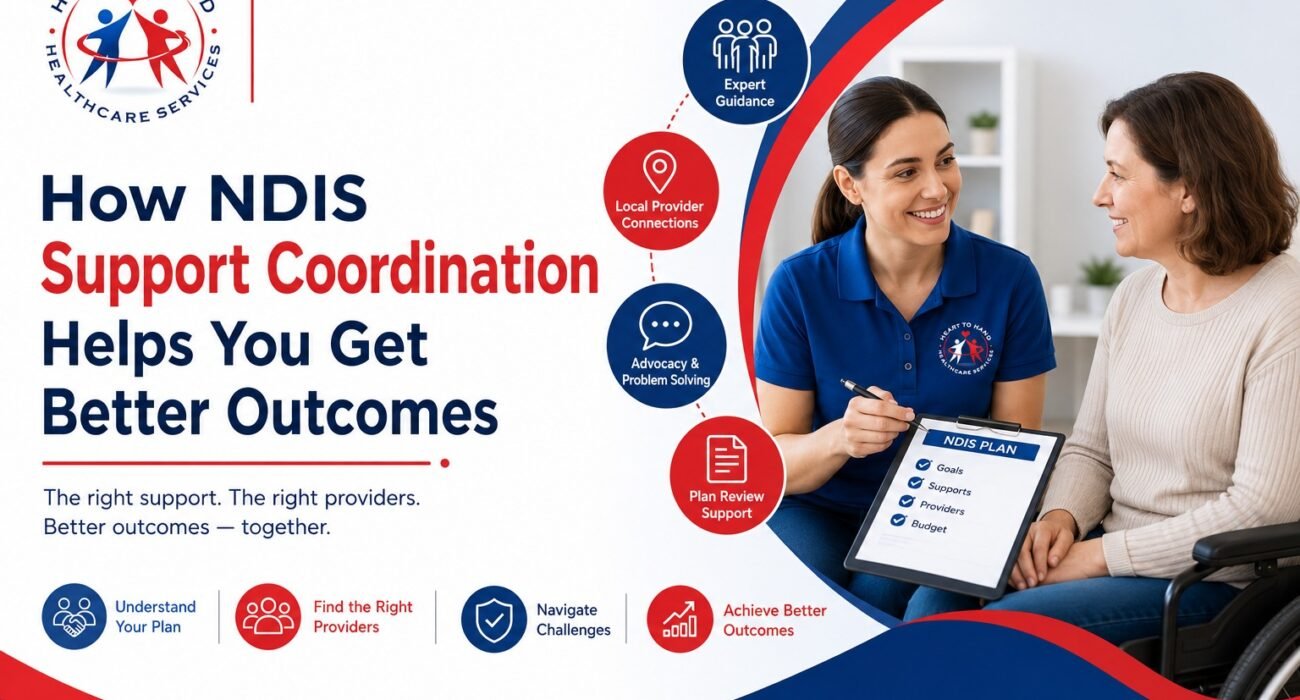
Support Coordination is one of those NDIS supports that’s easy to overlook until you realise how much of a difference it makes. For participants navigating a new plan, managing multiple providers, or trying to get the most out of their funding, a good support coordinator is genuinely valuable — not a nice-to-have, but a practical resource that changes outcomes.
What Support Coordinators Actually Do
A support coordinator helps you understand and implement your NDIS plan. That sounds straightforward, but in practice it covers a lot of ground. They help you identify and connect with providers, assist with setting up service agreements, help you understand what your funding can be used for, and act as a point of contact when things aren’t working as they should.
They’re also there when life changes. If your circumstances shift — a health change, a housing move, a change in family support — your coordinator helps you reassess what you need and adjust your supports accordingly.
The Difference Between Support Coordination and Plan Management
These two are different roles and they often get confused. Plan management is about the financial side — paying your providers, tracking your budget, and managing the administrative requirements of your plan. A plan manager handles invoices and funding.
A support coordinator focuses on the practical and strategic side — what supports you’re accessing, whether they’re meeting your goals, how to connect with good providers, and how to navigate challenges within the system. Many participants have both, and they work in complementary ways.
Navigating the Provider Landscape
One of the most practically useful things a support coordinator does is help you find providers. In a city with dozens or hundreds of providers for any given support type, knowing who’s reputable, who has capacity in your area, and who tends to work well with people in similar situations is genuinely valuable knowledge.
A support coordinator who’s been working in your area builds relationships and familiarity with providers over time. They often know things about providers that don’t appear in any directory — how they handle complaints, whether their workers are consistent, how they perform when something goes wrong.
When Things Go Wrong
Providers don’t always deliver what they’ve agreed to. Workers don’t always show up. A support that looked right on paper doesn’t always work in practice. When these situations arise, having a support coordinator to help you manage them is significant.
They can raise concerns with providers on your behalf, help you understand your rights, assist you in changing providers if needed, and contact the NDIS or the Quality and Safeguards Commission if there’s a serious issue. Navigating those conversations alone is harder than having someone in your corner.
Support Coordination Around Plan Reviews
Plan reviews are when the NDIS reassesses your funding and goals. How your plan is reviewed affects what funding you have for the next period. A good support coordinator helps you prepare for reviews — documenting what’s working, identifying gaps, gathering evidence from providers and treating professionals, and helping you articulate what you need.
Participants with active support coordination tend to get better outcomes at plan reviews because the evidence supporting their needs is well organised and clearly communicated. That’s not a small advantage.
Who Benefits Most from Support Coordination
Not every NDIS participant has support coordination funded in their plan, and not everyone needs it at the same intensity. Participants with complex needs, multiple providers, significant health conditions, or plans they’re struggling to implement tend to benefit most.
If you’re new to the NDIS, support coordination in the first plan period can be particularly valuable — it helps you understand how the system works at a time when the learning curve is steepest. For participants who’ve been using the NDIS for a while and have a stable set of providers, the need might be less intensive but still useful for plan reviews and when circumstances change.
Specialist Support Coordination
For participants with very complex situations — significant behaviour support needs, complex medical conditions, or situations involving multiple service systems like housing or justice — Specialist Support Coordination may be funded instead of, or in addition to, general Support Coordination. This is delivered by practitioners with relevant specialist qualifications and experience.
If you think you might benefit from specialist coordination and it’s not currently in your plan, that’s worth discussing at your next plan review with appropriate evidence from your treating team.